
Is Your Tire Choice Slowing You Down?
When it comes to shaving time off your bike split, most triathletes focus on power output, aerodynamics, or pacing strategy. But one of the most overlooked — and most impactful — variables is sitting right beneath you: your tires.
The right tire choice can mean the difference of 15 to 20+ minutes over an Ironman bike leg. Yet many athletes default to whatever came with their bike, or worse, choose purely for puncture protection without understanding the speed cost. Let's break it down.
The Fear of the Flat
A flat tire on race day is every triathlete's nightmare, and understandably so. This fear pushes many athletes toward the Continental Gatorskin — a tire legendary for its puncture resistance. But that protection comes at a price: it's one of the slowest tires on the market.
So how big is the penalty, exactly?
Understanding Rolling Resistance
The team at Bicycle Rolling Resistance has tested and compared a wide range of tires, measuring two key metrics:
Rolling resistance — the force a tire exerts against the road surface, measured in watts. Lower is faster. Puncture score — a rating of puncture protection. Higher scores mean better protection.
The table below shows rolling resistance data for popular tire brands, including the tire model, tube type, required wattage at specific pressures, and watt savings compared to Gatorskins.
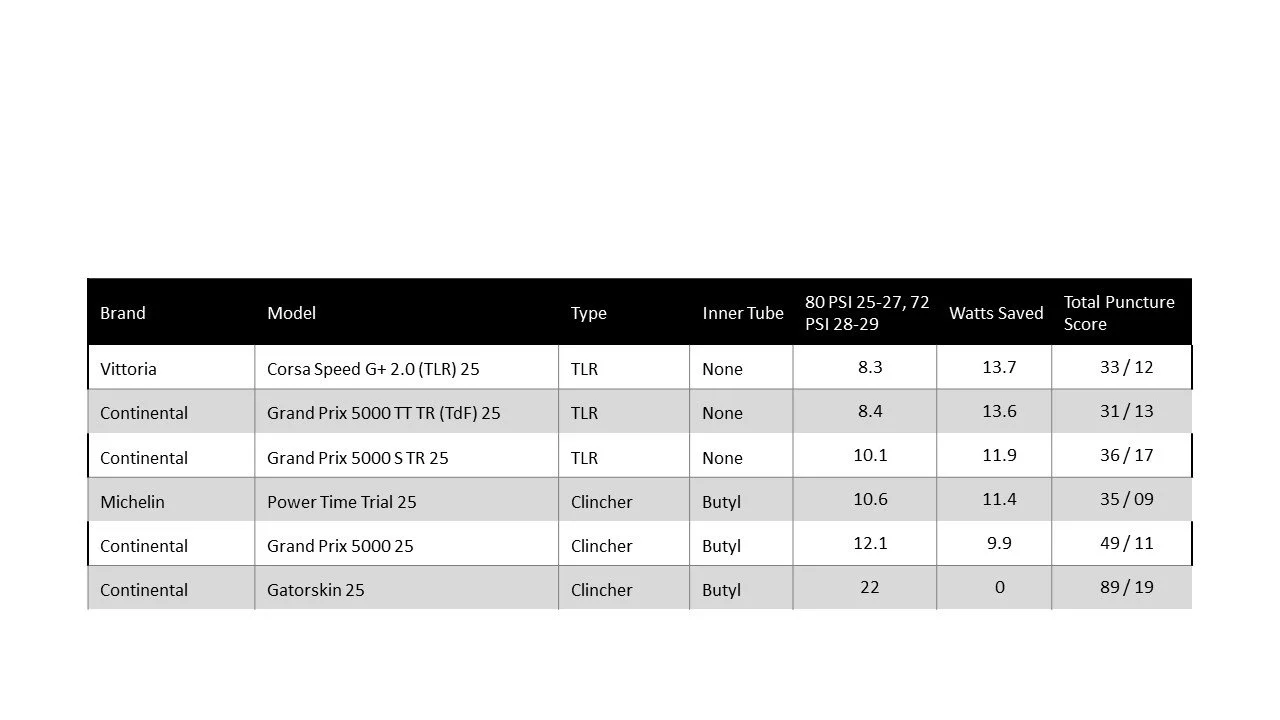
[Source: https://www.bicyclerollingresistance.com/road-bike-reviews] (Note: TLR/TR/TLE denotes tubeless tires; others use butyl tubes.)
Clothing: Sleek and Streamlined
Advances in triathlon clothing have led to faster suits, with sleeves generally outperforming sleeveless options.
Ensure a tight-fitting suit to eliminate wind resistance, and consider aero calf sleeves for additional savings.
Helmets: Cutting Through the Air
Aero helmets typically outpace road helmets, but the right fit is crucial. Look for width at the front and proper tail positioning.
Save 9 to 12 watts with the correct aero helmet, but consider ventilation in hotter climates.
Bottle Positions: Hydration with Speed
Experiment with bottle placements, noting the growing trend of tucking bottles down tri suits for optimal speed.
Proper placement on the frame matters; Aero Coach's tests reveal significant time savings with aero bottles.

source: https://www.aero-coach.co.uk/water-bottle-testing
Drive Chain: The Silent Force
A clean, waxed chain improves efficiency and reduces wear on the chain and cassette.
Despite the time investment, a waxed chain enhances overall performance and extends the lifespan of your equipment.
If we evaluate the cost effectiveness of each equipment choice we can compare the watts saved.
The table below shows just that.
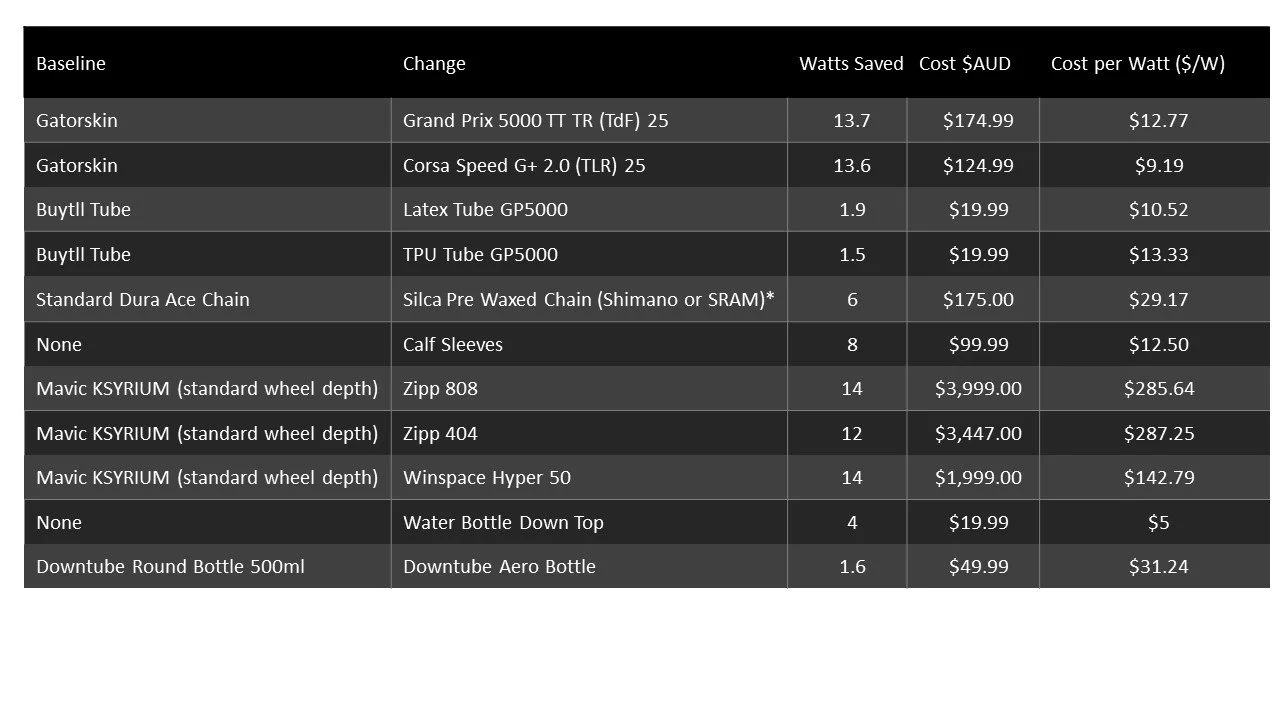
Here's a brief summary of the key points:
Wheels and Tyres:
Savings: 12 to 14 watts
Cost per Watt: Tyres have a lower cost per watt compared to wheel upgrades.
Recommendation: If you have a good wheelset, prioritise tyre choice for cost-effective watt savings.
This is an attempt to provide insight into the efficiency of each product.
It emphasises the importance of considering not only the absolute watt savings but also the cost-effectiveness of each upgrade option.
Mastering the art of time trials warrants attention to every detail.
By optimising your bike position, wheelsets, tyres, clothing, helmet, bottle positions, and drive chain, you can unlock the full potential of your time trial performance.
Invest wisely, experiment purposefully, and watch as seconds drop off your bike splits.
